

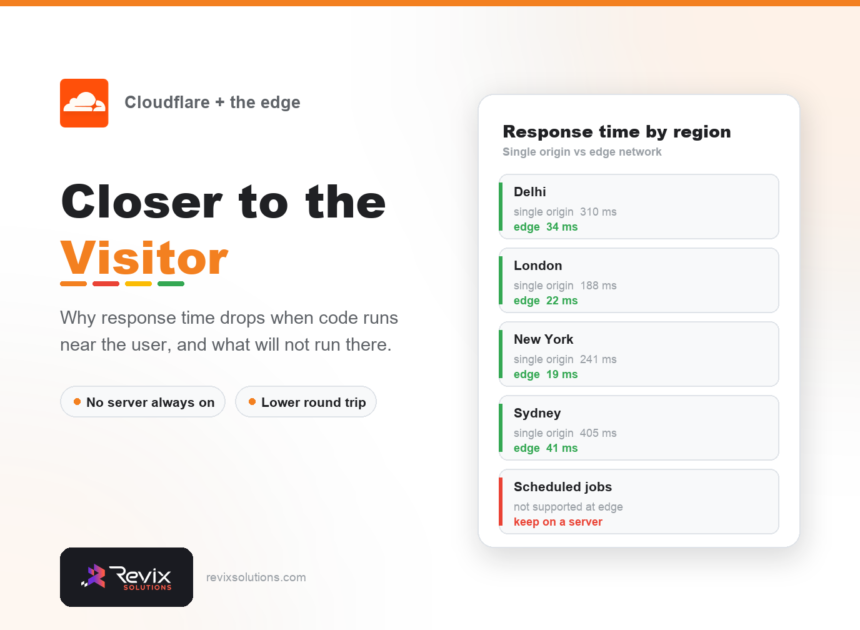
Edge deployment for marketing sites means serving your pages from data centres near the visitor rather than one region. rather than one region, which removes a chunk of delay from every request. It is a genuine improvement with real constraints, and both halves of that sentence matter before you plan a migration.
The short answer
Running code at the edge cuts the round trip on every request, which improves Core Web Vitals and usually costs less than an always-on server. Static pages and light API routes move easily. Long-running jobs, heavy computation and the WordPress application itself do not – put a CDN in front of those instead.
What edge deployment for marketing sites actually changes
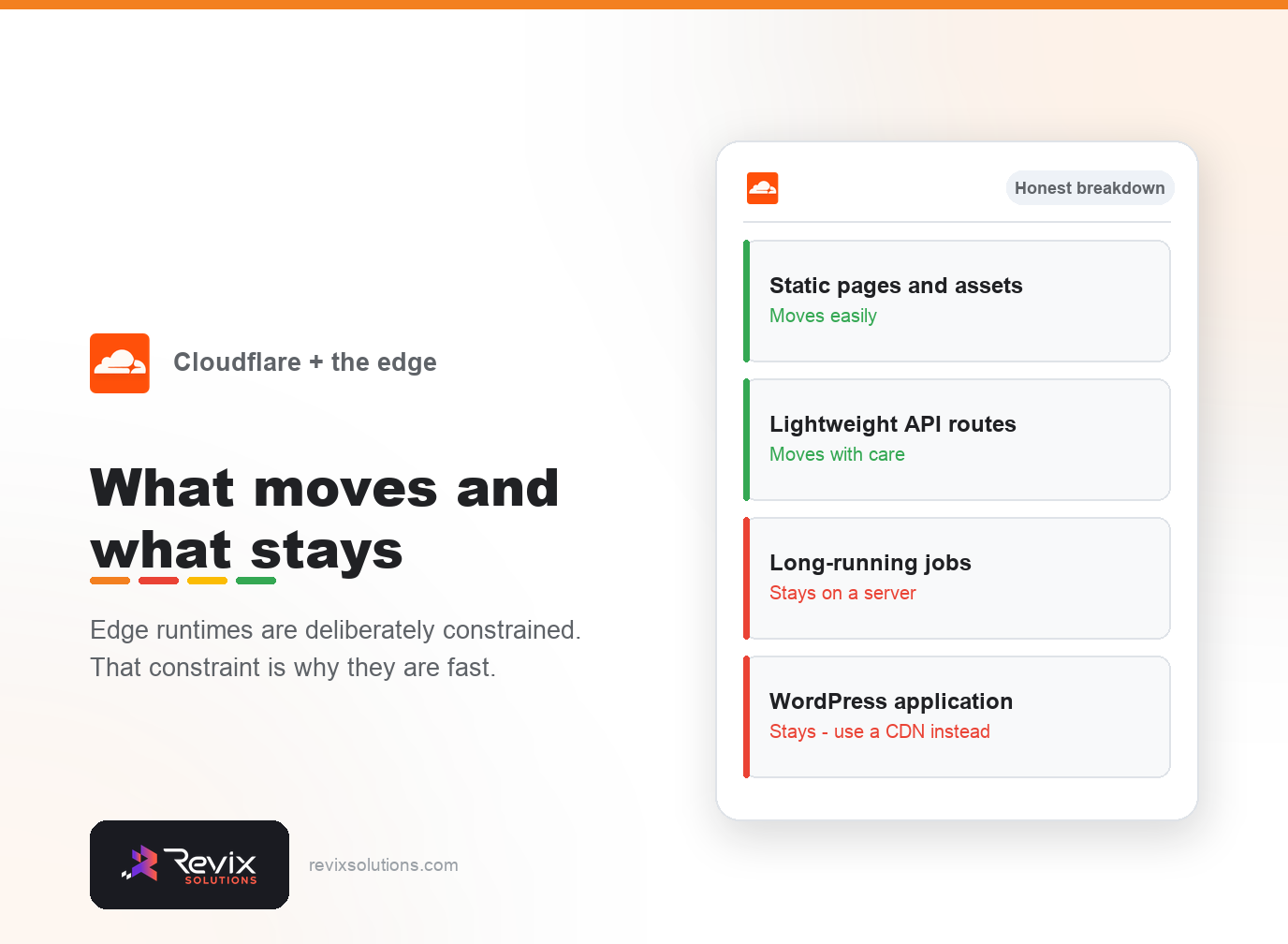
| Workload | Runs at edge | Notes |
|---|---|---|
| Static HTML and assets | Yes | The obvious win |
| Form handling, redirects | Yes | Small and fast |
| Image transformation | Usually | Depends on the platform |
| Scheduled batch jobs | No | Use a server or queue |
| WordPress PHP | No | CDN in front instead |
The SEO effect, stated honestly
Faster response improves Core Web Vitals, and Core Web Vitals is a ranking signal. It is a small one. A site that loads instantly and answers nothing will not outrank a slower page that answers the question properly.
In practice, edge deployment for marketing sites rewards small scoped changes over sweeping ones.
However, edge deployment for marketing sites only pays off when every change is reviewed before it ships.
That said, edge deployment for marketing sites does not remove the need for someone who understands the business.
Is the migration worth it?
- Already static? Yes – it is close to free.
- Static plus a few API routes? Usually yes.
- WordPress with plugins? No – put a CDN in front and optimise what you have.
- Complex application logic? Assess route by route, not all at once.
Frequently asked questions
What is edge deployment?
Edge deployment runs your code in data centres close to the visitor rather than in one region, which cuts the round-trip delay on every request.
Does edge hosting help SEO?
Indirectly. Faster response improves Core Web Vitals, which is a ranking signal – but content quality moves rankings far more.
Is it cheaper than traditional hosting?
For static and lightweight dynamic sites, usually yes, because there is no always-on server to pay for.
What cannot run at the edge?
Long-running processes, heavy computation and anything needing a persistent local filesystem. Edge runtimes are deliberately constrained.
Can I move a WordPress site to the edge?
Not the application itself. You can put a CDN in front of it, or move to a static front end that pulls content from WordPress.
How hard is the migration?
For a static site, minutes. For anything with server-side logic, it depends entirely on what that logic does.
If you would rather have edge deployment for marketing sites handled for you, our website optimisation and website development services cover exactly this work.
Want to know if hosting is your bottleneck?
We measure where your load time actually goes and tell you whether hosting, code or content weight is the real problem.
Plans start from Rs 16,000 per month. See current pricing.
Related reading: Core Web Vitals optimization guide, website design cost in India.