
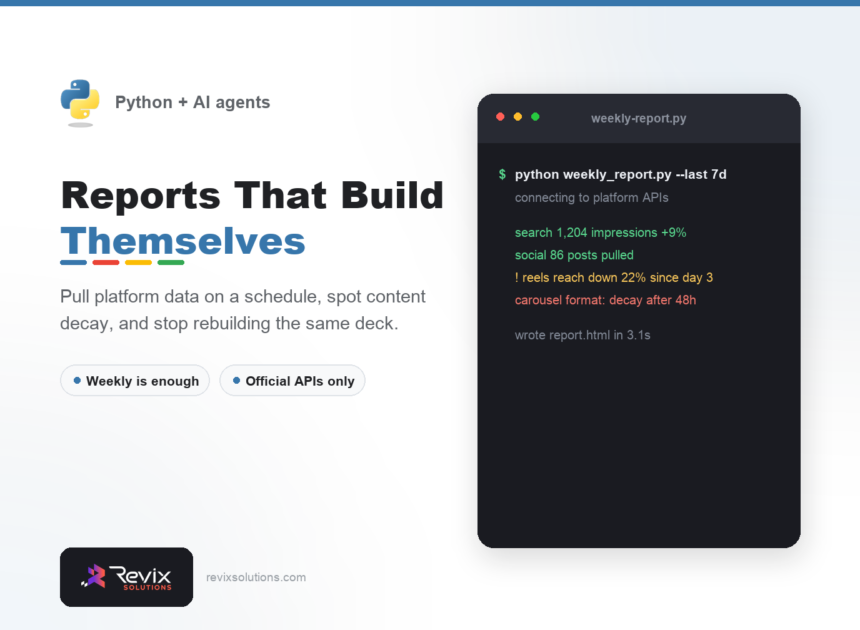
To automate marketing reports with python is to stop rebuilding the same deck every month. An AI agent can write the script; the platforms expose the data through official APIs; the output lands somewhere you actually read. The hard part is deciding what belongs in it.
The short answer
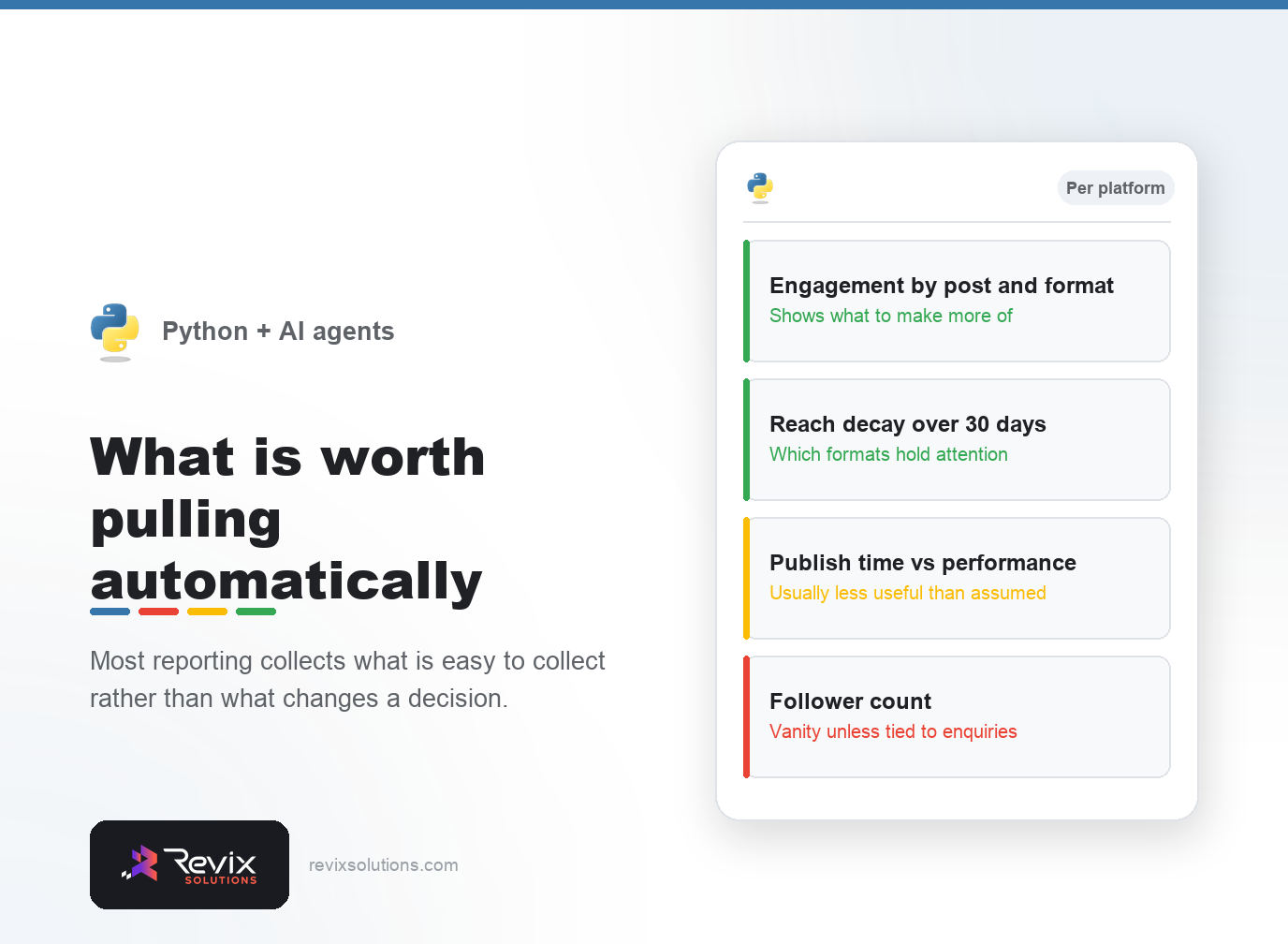
Use official platform APIs rather than scraping, pull weekly rather than daily, and report on what changes a decision. Engagement by format and reach decay are worth tracking. Follower counts are not, unless you can tie them to enquiries. An agent writes the script in minutes – you still own what it collects.
What automate marketing reports with python should actually cover
| Metric | Decision it informs | Worth automating |
|---|---|---|
| Engagement by format | What to produce more of | Yes |
| Reach decay curve | Which posts have shelf life | Yes |
| Enquiries by source | Where budget should go | Yes |
| Follower growth | Rarely anything | Only as context |
| Best time to post | Marginal at low volume | No |
Use the APIs, not scrapers
Official APIs are stable, documented and permitted. Scraping pages directly usually breaches terms of service and breaks the moment markup changes – which it does constantly.
The practical limit is that anything not exposed by an API cannot be collected reliably. That is a constraint to design around, not to work around.
In practice, automate marketing reports with python rewards small scoped changes over sweeping ones.
However, automate marketing reports with python only pays off when every change is reviewed before it ships.
That said, automate marketing reports with python does not remove the need for someone who understands the business.
Where this goes wrong
- Reporting everything. Volume buries the two numbers that matter.
- Running an unread script. If nobody opens it, delete it.
- Trusting output without checking. Verify against the platform dashboard the first few runs.
- Hard-coding credentials. Keep keys in environment variables, never in the script.
Frequently asked questions
Do I need to know Python to use these scripts?
You need enough to read what a script does before running it. An agent can write it; you remain responsible for what it touches.
What can a reporting script actually pull?
Anything the platform exposes through its API – engagement, reach, publish dates, follower counts. What is not in the API cannot be scraped reliably or lawfully.
Is scraping social platforms allowed?
Use official APIs. Scraping pages directly usually breaches terms of service and breaks whenever the markup changes.
How often should reports run?
Weekly is enough for most teams. Daily pulls add noise without changing decisions at typical posting volumes.
What is content decay?
Content decay is the steady decline in reach an older post receives. Tracking it shows which formats hold attention and which fade within days.
Where should the output go?
A simple HTML dashboard or a spreadsheet both work. The format matters far less than whether anyone reads it weekly.
If you would rather have automate marketing reports with python handled for you, our social media marketing and free SEO audit cover exactly this work.
Spending days a month on reporting?
We map which numbers actually drive your decisions, then automate the collection so the reporting takes minutes instead of days.
Plans start from Rs 16,000 per month. See current pricing.
Related reading: GA4 for small business, Instagram marketing for business in India.